

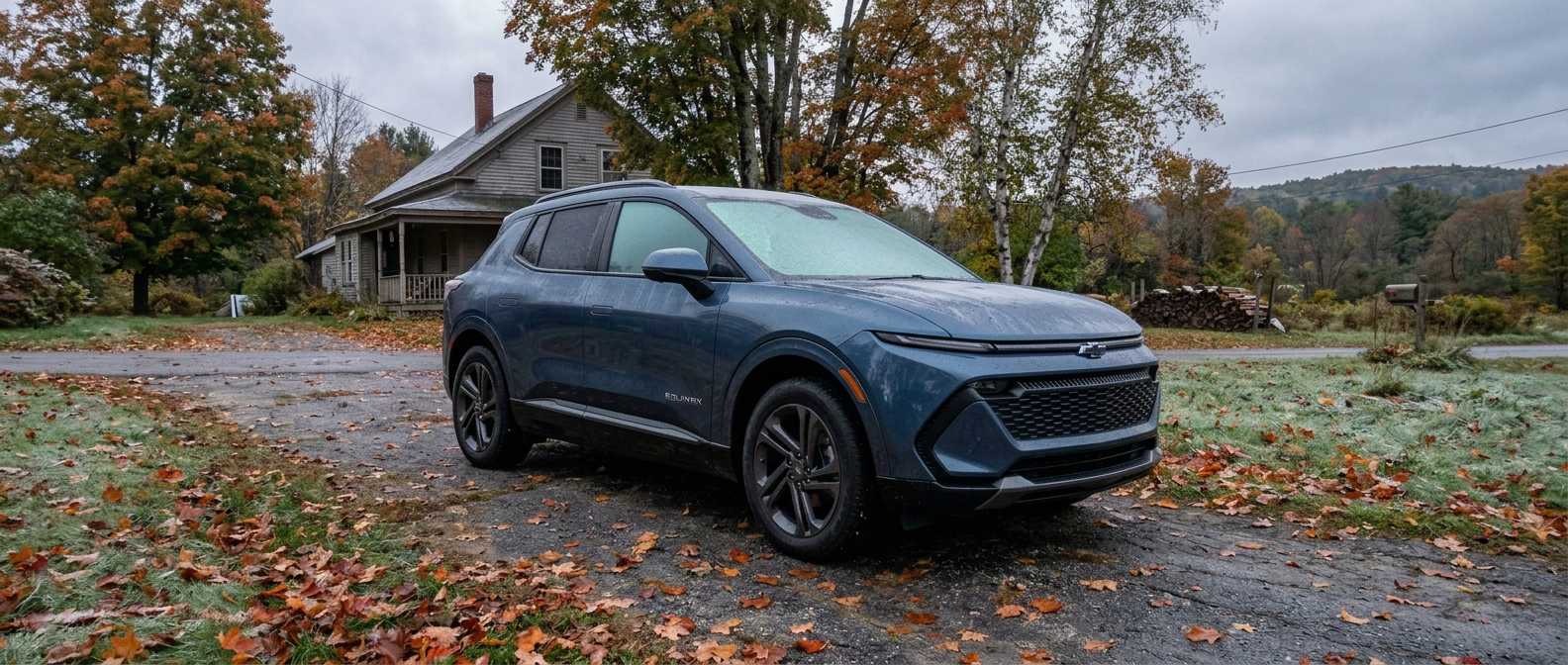
Southern Vermont doesn't do mild winters. From November through March, Brattleboro mornings mean cold-soaked engines, salted roads, and plenty of short trips across town. Chain enough cold starts together with five-mile school runs and you've got a combination that's genuinely hard on engine oil, and your Chevy's Oil Life Monitor knows it. What it tells you, and why it sometimes reads lower than you'd expect, is worth understanding before the first hard freeze.
Let's start with the honest answer. Most 2026 Chevrolet gas engines call for a full synthetic oil meeting the GM dexos1 Gen 3 specification, at an interval the Oil Life Monitor governs (typically around 7,500 miles under normal driving, never beyond 12 months regardless of mileage). Cold weather and repeated short trips shorten that interval. Trust the monitor, honor the 12-month backstop, and use the right oil. Do that, and you've covered the guide in a sentence. The rest explains why.
In a Vermont winter, the GM Oil Life Monitor accumulates cold-start "penalties" every morning, even low-mileage drivers may see a service reminder well before 7,500 miles. The 12-month maximum applies regardless of what the odometer reads.
The Chevrolet Equinox is a familiar face in our service lane heading into winter, alongside the Traverse and the Colorado, so the specs below come straight from those models and line up with Chevrolet's published requirements.
Why Does Vermont Driving Hit Your Oil Harder Than the Mileage Suggests?
Engine oil wears according to how the engine actually ran, not the number showing on the odometer, so a Vermont winter of short, cold Brattleboro trips can age a batch of oil well before the mileage count suggests it's anywhere close to due. Miles still matter, but the operating conditions during those miles matter more, and Vermont piles them on.
| Local Condition / Use | The Feature That Handles It | Why It Matters for Your Oil |
|---|---|---|
| Cold Vermont mornings (below 20 degrees F) | dexos1 Gen 3 full synthetic's low-temperature flow | Conventional oil thickens at cold temps; full synthetic circulates faster at startup, reducing the window of metal-on-metal contact before pressure builds |
| Short school runs and downtown errands (under 10 miles) | GM Oil Life Monitor cold-start penalty tracking | Engine never fully warms; unburned fuel and moisture don't evaporate from the oil, accumulating as contaminants |
| Mud season and rough dirt roads | Full synthetic's shear stability | Extreme suspension stress and variable load conditions don't directly degrade oil, but keeping fresh oil in place protects seals and filter integrity |
| November-to-March consecutive cold starts | Oil Life Monitor algorithm (tracks revolutions, temperature, idle time) | Each cold start "costs" more algorithm points than highway miles; a winter of short trips can trigger a service reminder at 4,000 to 5,000 miles instead of 7,500 |
| Towing a trailer or camper (Colorado, Silverado 1500) | Higher-load dexos1 Gen 3 oil protection + tighter intervals | Towing raises oil temperature and load; Chevrolet recommends reducing intervals during sustained towing or hauling |
The GM Oil Life Monitor: What It's Actually Tracking
The monitor isn't a mileage counter, and it never tests the oil directly, yet it still knows when a change is due because it's a software algorithm in your vehicle's Engine Control Module that watches engine revolutions, coolant temperature, oil operating temperature, ambient temperature, idle time, and trip lengths before calculating when the oil has done enough work. No sensor dips into the oil pan.
A January reminder at around 4,500 miles can look like a glitch. It isn't. Cold starts in sub-freezing temperatures push the algorithm to assign heavier "wear events" than the same miles would at 60 degrees, and the GM Oil Life Monitor is calibrated to do exactly that. You can watch the percentage yourself in the Driver Information Center. It starts at 100%, and when it hits 15%, Chevrolet's system displays "Change Engine Oil Soon." At 0% it reads "Oil Change Required."
One detail is easy to miss. The monitor doesn't know whether your oil level has dropped from a small leak or whether the engine is consuming oil between changes. It tracks engine operating conditions rather than the actual fluid in the pan. Checking the dipstick every month takes thirty seconds and catches what the monitor can't.
The 12-month rule deserves its own flag. Even if you're a low-mileage driver who puts on 4,000 miles a year running mostly errands, Chevrolet specifies a change at least once per 12 months regardless of where the monitor percentage sits. Oil still degrades from oxidation and moisture absorption while the car sits. Time still counts.
Chevrolet specifies oil changes at least once every 12 months, regardless of mileage, for all 2026 gasoline models. Source: GM-published service information, consistent with NHTSA Technical Service Bulletin reference for GM Oil Life Monitor intervals (at least once per year or 7,500 miles or 300 engine hours, whichever comes first).
Schedule Your Oil Change in Brattleboro
What Oil Does Your Chevrolet Actually Take?
Every 2026 Chevrolet gasoline engine requires a dexos1 Gen 3 certified full synthetic oil, though the viscosity grade and the capacity shift from one engine to the next, which means the right bottle for your Equinox may not be the right bottle for a Colorado. GM introduced the Gen 3 specification in November 2021, and it's the current standard for every gas-engine Chevy on the road. It calls for tighter sludge control, better oxidation resistance, enhanced turbocharger protection, and (directly relevant to Vermont) improved cold-temperature performance compared to the Gen 2 spec it replaced.
The common models in our lineup break down this way.
| Model | Engine | Oil Spec | Viscosity | Capacity (with filter) | Interval |
|---|---|---|---|---|---|
| Equinox | 1.5L Turbo I-4 (FWD) | dexos1 Gen 3 Full Synthetic | SAE 0W-20 | approx. 4.2 qt | 7,500 mi / 12 mo |
| Equinox | 1.5L Turbo I-4 (AWD) | dexos1 Gen 3 Full Synthetic | SAE 0W-20 | approx. 5.3 qt | 7,500 mi / 12 mo |
| Traverse | 3.6L V6 | dexos1 Gen 3 Full Synthetic | SAE 0W-20 | verify in owner's manual | 7,500 mi / 12 mo |
| Colorado | 2.7L TurboMax I-4 | dexos1 Gen 3 Full Synthetic | SAE 5W-30 | 6 qt | 7,500 mi / 12 mo |
| Silverado 1500 (5.3L) | EcoTec3 V8 | dexos1 Gen 3 Full Synthetic | SAE 0W-20 | 8.0 qt | 7,500 mi / 12 mo |
| Silverado 1500 (2.7L TurboMax) | Turbo I-4 | dexos1 Gen 3 Full Synthetic | SAE 5W-30 | approx. 6.0 qt | 7,500 mi / 12 mo |
One point is worth a second look at the parts counter. The dexos certification is a licensed standard, and a viscosity grade alone won't satisfy it. A bottle can say "0W-20" on the front and still fall short of dexos1 Gen 3. Look for the dexos label on the packaging, which is the licensed certification mark. Using an unlicensed oil in a 2021-or-newer Chevy puts you outside GM's published specification. It's an easy thing to check, and we always confirm it before any oil goes into your vehicle.
A note on the 0W-20 cold-flow advantage: The "0W" portion of 0W-20 refers to the oil's cold-cranking viscosity. At Brattleboro winter temps, a lower W-number means faster oil flow to engine bearings in the critical seconds after a cold start. Per GM's specification guidance, dexos1 Gen 3 in 0W-20 is specifically engineered to support cold-temperature startups and reduce low-speed pre-ignition (LSPI) in turbocharged direct-injection engines like the 1.5L in the Equinox.
Short Trips, Cold Starts, and the Brattleboro Reality
The 7,500-mile interval assumes "normal" driving, which Chevrolet defines as a mix of highway and local miles, engines that regularly reach full operating temperature, and moderate ambient conditions, and a Brattleboro winter doesn't match that description most of the time. Short winter trips are hard on oil, and no premium bottle changes that.
If your daily pattern from November through March looks like a run to Brattleboro Union High School on Fairground Road, a stop at the pharmacy on Elliot Street, and a quick errand back home (say, five to eight miles total), your engine is unlikely to reach full operating temperature on most of those trips. When an engine doesn't fully warm up, two things happen:
- Condensation and unburned fuel that enter the oil during cold starts can't evaporate out through the PCV system
- Contaminants accumulate, accelerating oil degradation faster than the odometer suggests
The GM Oil Life Monitor handles this by penalizing cold-start events and short trip lengths in its algorithm. A Vermont winter driver might see the "Change Engine Oil Soon" reminder at 4,500 or 5,000 miles rather than 7,500, and the monitor is working exactly as designed when that happens. Follow it.
For genuinely low-mileage drivers (say, under 6,000 miles per year), the 12-month time rule takes over. Change it once a year, minimum. Oil degrades from oxidation and moisture absorption even when the vehicle sits.
One practical habit our service team recommends is a monthly dipstick check through the winter. The OLM reports the oil's estimated life rather than its quantity. A small consumption issue or a seep at the drain plug can quietly take you from full to low without tripping any warning.
Book a service appointment online and we'll reset the Oil Life Monitor correctly after every change, a step that's easy to forget if you've had oil changed somewhere else.
Categories:
Service